 Back to News
 Jump to other articles:
- IN THE MEDIA: Latitude Features In Le Figaro
- Citizenship by Investment: Which Program Should You Choose?
- From Malta to Washington: What Pete Buttigieg’s Family Story Says About Malta’s Global Reach
- What Happens Post Approval? Malta vs Greece vs Portugal Residence Programs Compared
- Malta Permanent Residence Program: Costs, Requirements, and Application Steps
What Is It Really Like to Live in Malta as an International Family?
Share:



Families considering an international move often focus first on visas and residence options, and while extremely important, these are only one part of the overall decision. Day-to-day life, education, healthcare, safety, travel opportunities, and the quality of life often become the factors that determine whether a move is going to be successful for everyone.
In recent years, Malta has become one of Europe’s most established destinations for internationally mobile families. As an English-speaking EU member state in the Mediterranean, it combines a relaxed lifestyle with strong international connectivity, modern infrastructure, and access to the Schengen Area. Whether relocating through the Malta Permanent Residence Program, or exploring other long-term connections with the country, many families are ultimately drawn by the lifestyle Malta offers rather than simply the immigration route itself.
Key Takeaways
- Malta combines Mediterranean living with the convenience of an English-speaking environment
- International schools and healthcare make the country attractive for relocating families
- Malta offers easy access to Europe through the Schengen Area
- The Malta Permanent Residence Program (MPRP) allows qualifying families to obtain permanent residence without a physical residence requirement
- Lifestyle considerations are often as important as immigration options when choosing where to relocate
What’s Daily Life Like in Malta?
A Relaxed Mediterranean Lifestyle
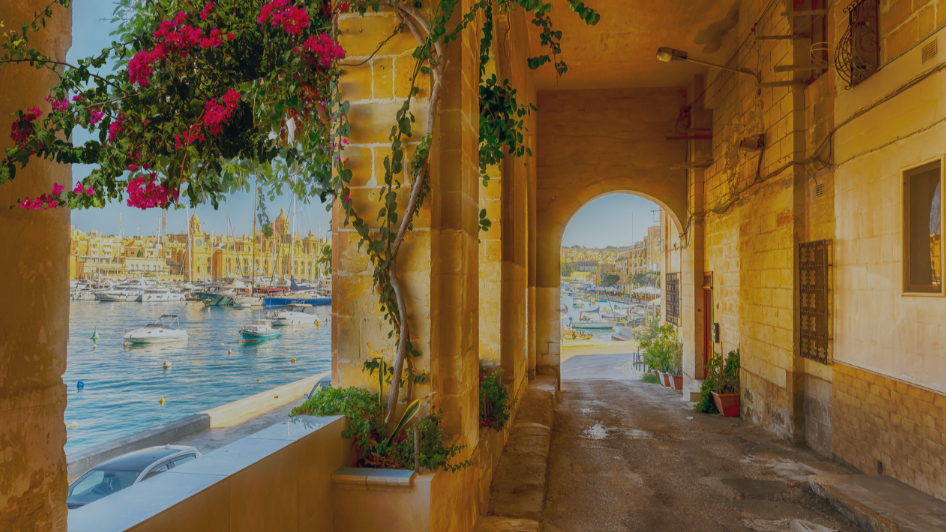
Life in Malta moves at a noticeably slower pace than many major financial centers. Families enjoy over 300 days of sunshine each year, short commuting distances, outdoor cafes, beaches, and a strong emphasis on family life.
Malta’s compact size means that schools, workplaces, and leisure facilities are generally within relatively short distances. However, traffic can significantly affect journey times, so families should consider daily travel patterns carefully when choosing where to live.
English makes settling in easier
One of Malta’s biggest advantages for international families is that they don’t need to worry about a language barrier. English is an official language (alongside Maltese), and is used extensively across schools, business, healthcare and government services.
This significantly reduces many of the practical challenges families experience when relocating abroad. For children arriving from English-speaking education systems, the transition can often be smoother than in many other European destinations.
Education Options
Education is frequently one of the biggest priorities for relocating families.
Malta’s education system includes:
- State schools
- Church schools
- Independent and international schools
- British-curriculum options at selected schools
- International Baccalaureate programs at selected institutions
Many expatriate families choose international schools because they provide continuity for children who may later move elsewhere.
Beyond primary and secondary education, Malta has an established higher education sector led by the University of Malta. The country also has a range of specialist institutions offering education and training in fields including medicine, finance, maritime studies, and technology.
Healthcare
Malta offers both public and private healthcare. Residents under the MPRP must maintain suitable health insurance covering Malta and other European countries as part of the program requirements.
Private healthcare is widely used by international families and is known for relatively short waiting times, and English-speaking medical professionals.
Safety
Safety is frequently among the reasons families consider Malta. The country is generally regarded as a safe European jurisdiction, although families should take the same practical precautions they would when living in any other country.
Travel Around Europe Made Easy
One of Malta’s principal lifestyle advantages is its connectivity with the rest of Europe. MPRP beneficiaries holding valid residence cards can travel within the Schengen Area for up to 90 days in any 180-day period, subject to the applicable entry conditions. For internationally active families, this can make business trips, holidays, and family visits considerably easier.
The MPRP also provides the right to reside permanently in Malta. It does not provide an unrestricted right to reside or work elsewhere in the Schengen Area.
Malta and Business Owners
Many relocating families continue operating businesses internationally while setting themselves up in Malta.
The residence route selected must, however, support the family’s intended activities. The MPRP does not automatically grant employment rights in Malta or elsewhere in the Schengen Area, and anyone intending to work locally should obtain advice on the permissions required.
The jurisdiction offers:
- EU membership
- Strong professional services sector
- Modern banking and financial services
- Growing technology ecosystem
- Increasing family office activity
Latitude’s recent coverage of Malta Vision 2050 strategy, and the country’s growing appeal as a base for family offices, reflects this longer-term economic direction, helping reinforce its position as more than simply a lifestyle destination.
Alex Hopkin, Latitude’s Director of Operations, says families are now assessing Malta against a much broader range of long-term priorities.
“As international mobility continues to evolve, families are increasingly evaluating destinations through a broader lens than immigration alone,” he said.
“Lifestyle, education, healthcare, business opportunities and long-term stability are becoming equally important considerations. Through Malta’s continued investment in economic development, innovation and international business, we’re seeing the country appeal increasingly to globally mobile families seeking a long-term European base.”
How Does the Malta Permanent Residence Programme (MPRP) Fit In?
While lifestyle is often the deciding factor, residence status provides the foundation that allows families to establish themselves in Malta.
The MPRP offers qualifying non-EU, non-EEA, and non-Swiss nationals permanent residence rights. Processing is commonly estimated at four to six months after a complete application has been submitted, although the timeframe varies according to the application’s complexity, the completeness of the supporting documentation, and the due diligence required.
Eligible family members may include a spouse, qualifying dependent children, and financially dependent parents or grandparents, subject to the program’s requirements. There is no minimum physical presence requirement for maintaining MPRP status.
Applicants under the MPRP must either purchase a qualifying residential property for at least €375,000 or rent a qualifying property for at least €14,000 annually. The qualifying property must be retained for a minimum of five years, after which the beneficiary must continue to maintain a residential property in Malta. Applicants must also satisfy the program’s contribution, donation, financial asset, health insurance, and due diligence requirements.
Mr Hopkin says the program is only one component of the decision families ultimately make.
“The families we work with rarely choose Malta for just one reason. It’s the combination of lifestyle, education, accessibility and long-term stability that makes the country so appealing. Residence is simply the mechanism that enables them to enjoy everything Malta has to offer.”
Related Resources
- Malta 2050 and What it Means for International Investors
- Why Malta is Becoming a European Base for Family Offices
- Exploring Malta: A Refined Guide for Prospective Residents
- Why Malta’s Improving Public Finances Matter to Those Considering Permanent Residence
Why This Matters for International Families
For many globally mobile families, relocation is no longer simply about obtaining another residence permit, it’s about choosing a place where children can receive an excellent education, parents can continue managing international businesses, and the whole family can enjoy a secure, high quality of life.
As Mr Hopkin explains: “Successful relocation isn’t only about obtaining a residence certificate; it’s about finding a country where every member of the family can genuinely see themselves building their future. Malta consistently delivers that balance.”
Malta has positioned itself as a practical European base for entrepreneurs, remote business owners, retirees, and internationally active families. Its strategic location, business-friendly environment, and international outlook continue to support this appeal.
Frequently Asked Questions
What is the Malta Permanent Residence Programme (MPRP)?
The MPRP is a government residence-by-investment program that allows eligible non-EU, non-EEA, and non-Swiss nationals and qualifying family members to obtain permanent residence in Malta. Successful applicants gain the right to reside indefinitely in Malta and may travel within the Schengen Area for up to 90 days in any 180-day period, subject to the applicable conditions. There is no minimum physical presence requirement for maintaining MPRP status. Eligible dependents may include a spouse, qualifying dependent children, and financially dependent parents or grandparents.
What is Malta Vision 2050?
Malta Vision 2050 is the government’s long-term national strategy for the country’s economic, social, and environmental development. It sets out priorities intended to support sustainable growth, resilience, and improved quality of life through to 2050.
Can children attend international schools in Malta?
Yes. Malta has independent and international schools, with British-curriculum and International Baccalaureate options available at selected institutions. Admissions procedures, fees, assessments, and the availability of places vary between schools.
Can multiple generations be included in the MPRP?
Yes. The MPRP can accommodate up to four generations in one application. Eligible family members may include a spouse, qualifying dependent children, and financially dependent parents or grandparents, subject to the applicable eligibility and evidence requirements.
Why do entrepreneurs relocate to Malta?
Many business owners value Malta’s EU membership, English-speaking workforce, strategic Mediterranean location, business-friendly environment and convenient access to European markets.
What immigration pathways are available for families interested in Malta?
Malta offers a range of residence and citizenship pathways depending on an individual’s circumstances. Families should seek professional advice to understand which options may be appropriate for their personal objectives and eligibility, as different programs have different legal frameworks and requirements.
Speak With Latitude Today
If you would like to discuss life in Malta or whether one of the country’s residence options could support your family’s plans, contact Latitude’s team for a complimentary consultation.
Our advisers assist internationally mobile individuals and families with:
- Residence planning
- Citizenship planning
- Relocation strategies
- Cross-border structuring
- Global mobility solutions
To learn more about Malta or to discuss your options:
- Contact the Latitude team: Contact Us
- Book a complimentary consultation with one of our experts: Schedule a consultation