 Back to News
Jump to other articles:
- Malta Leads Europe in Tourism Growth: What It Means for Property and MPRP Applicants
- IN THE MEDIA: Latitude Features In IMI Daily
- Why Argentina Is Emerging as a Lifestyle Destination for Global Citizens
- IN THE MEDIA: Latitude Features In Le Figaro
- Citizenship by Investment: Which Program Should You Choose?
Latin America Is No Longer Just A Plan B: Argentina, Panama, and Paraguay
Share:



Latin America is attracting growing attention from internationally mobile families, but its countries should not be treated interchangeably. Latitude Strategic Partner Roger Romero examines three markedly different options, and the objectives each may support.
By Roger Romero, Strategic Partner – Latin America, Latitude Group
Having spent much of my life in Europe before returning to Latin America, I have watched the international conversation around the region begin to change.
For many years, Latin America was rarely the first place internationally mobile families considered when exploring residence or citizenship. Europe was associated with established residence routes, the Caribbean with direct citizenship, and North America with education and commercial opportunity. Latin America was more commonly viewed as a lifestyle destination or a place to revisit through family and cultural connections.
That perception is fast becoming outdated. Families are now looking more seriously at Latin America as somewhere to live, establish business interests, diversify geographically, educate their children, or create a long-term alternative base. This does not mean abandoning Europe or replacing one region with another. Increasingly, families are constructing international lives that extend across several jurisdictions, each serving a different purpose.
However, “Latin America” is not a single proposition. The region encompasses different legal systems, economies, immigration frameworks, and lifestyles. Argentina, Panama, and Paraguay demonstrate just how different the available opportunities can be.
My experience with the Portugal Golden Visa illustrates why timing and careful assessment matter. When interest accelerated in 2018, Portugal was not yet the established global mobility destination it is today. Some early applicants were able to proceed under qualifying conditions that subsequently changed, and those who fulfilled the applicable legal requirements may since have become eligible to apply for citizenship. The lesson is not that every new opportunity will follow the same trajectory, but that emerging routes should be evaluated before their position in the market becomes obvious.
From Plan B to Deliberate Choice
The phrase “Plan B” is widely used in global mobility, but it can be misleading. It implies that a second residence or citizenship is something held in reserve exclusively for a crisis.
In reality, the most effective international planning is rarely based on a single worst-case scenario. Families may want greater long-term flexibility over where current and future generations can live and conduct business, access to different educational environments, closer connections to emerging markets with untapped opportunities, or the reassurance of holding residence rights somewhere they would genuinely be willing to spend time.
Latin America can support many of those objectives. It offers globally connected cities, significant natural resources, developing commercial centers, established private schools and universities, and lifestyles ranging from major capitals to coastal, rural, and mountain communities.
Geography matters as well. Much of the region operates within or close to North American business hours while remaining comparatively distant from several of the geopolitical tensions affecting other parts of the world.
Nevertheless, selecting a country requires more than identifying the lowest financial threshold or the fastest advertised process. Applicants must understand their priorities and interests, what status they will receive, how it is maintained, whether their family can be included, and what the country would offer them beyond an immigration document.
Argentina: A New Citizenship Proposition
Argentina Citizenship by Investment represents the most significant recent development in the region.
The Argentine government has announced its intention to introduce South America’s first Citizenship by Investment offering, with applications expected to open after the final operational framework has been completed.
The anticipated structure includes two principal qualifying options: a non-refundable contribution to the Argentine Treasury, expected to begin at USD 350,000 for a single applicant, or an investment of USD 800,000 in an Argentine sovereign bond. Additional contribution requirements are expected to apply when spouses and children are included.
Argentina is unusual because the proposition centers on citizenship rather than residence. It is also a G20 country with a substantial economy, a globally recognized culture, respected educational institutions, and an established passport providing extensive international mobility.
For the right family, this is about much more than acquiring another travel document. Argentina offers the possibility of a meaningful connection to one of Latin America’s most prominent nations, with Buenos Aires as an internationally recognized capital and regions such as Mendoza and Patagonia offering distinctly different lifestyle possibilities.
Current planning also indicates that the citizenship offering may be finite, potentially closing or changing materially after approximately 5,000 applications. The final allocation and counting methodology have not yet been published, so no applicant should assume that a place can be guaranteed before the operating rules are released.
However, limited availability makes responsible preparation important. Interested families can begin reviewing their likely eligibility, family composition, source of funds, and civil documentation without transferring funds or making commitments based on rules that have not yet been finalized.
Panama: An Established and Connected Base
Panama, meanwhile, presents a very different proposition. Rather than a direct citizenship offering, Panama provides established residence options for individuals and families seeking a base in the Americas. Its location, international air connections, use of the US dollar, financial and professional-services sectors, and long history as commercial crossroads have made it particularly relevant to internationally active families.
From an investment perspective, Panama also provides access to qualifying real estate opportunities in a country with established tourism, international connectivity, and varied lifestyle destinations. Any property should nevertheless be assessed on its own merits, without assuming that residence eligibility will guarantee a financial return.
Panama’s Qualified Investor Visa provides a pathway to permanent residence through qualifying investments. Recent regulatory changes have refined the applicable thresholds and requirements across real estate, securities, and fixed-deposit options, again demonstrating why applicants should not assume that qualifying conditions will remain unchanged indefinitely.
Panama also maintains other residence categories that may suit retirees, financially independent applicants, professionals, or nationals of qualifying countries.
The country may appeal particularly to families who want a practical base with strong connections to North America, South America, and the Caribbean. Panama City offers modern infrastructure, international schools, private healthcare, and a substantial expatriate and professional community.
It is important, however, to distinguish permanent residence from citizenship. Residence provides the legal right to live in Panama, subject to its applicable conditions. Naturalization is a separate process involving its own residence, integration, language, and discretionary requirements.
Immigration residence and tax residence must also be considered separately. Holding a Panamanian residence permit does not, on its own, resolve every tax question. Families should obtain independent advice based on where they live, where their income arises, and how their wider affairs are structured.
Paraguay: An Overlooked Long-Term Opportunity
Paraguay remains less familiar to many international families, but that is precisely why it merits closer consideration.
Located at the center of South America and a full member of Mercosur, Paraguay has attracted increasing attention for its macroeconomic trajectory, competitive operating environment, abundant renewable energy, and relatively low cost of living.
Its recently introduced Investor Pass offers qualifying applicants a route to permanent residence through approved forms of investment. Other residence pathways may also be available depending on an applicant’s circumstances and intended activities.
Paraguay should not be presented as a shortcut to a passport. Although naturalization may eventually be possible for eligible residents, it is a separate legal process requiring a genuine connection to the country and satisfaction of the applicable conditions. Residence should therefore be pursued because the country and the status make sense independently – not solely because of a future citizenship expectation.
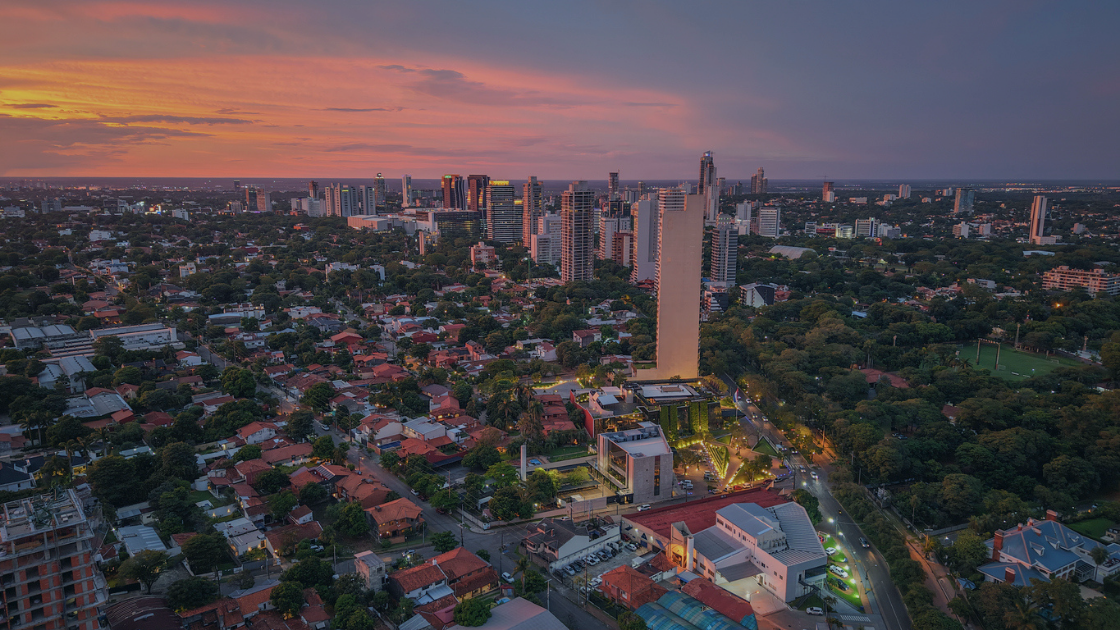
For entrepreneurs and families prepared to engage with the country, Paraguay offers qualities that are easily overlooked from abroad. Asunción has developed into a growing commercial center, while the country’s location creates connections with larger neighboring markets.
I hold Paraguayan nationality and am now based in Asunción after spending much of my life in Portugal, Spain, and the Netherlands.
That experience has taught me that international mobility does not always follow in one direction. Moving to Europe as a teenager was the right decision for one stage of my life; returning to Latin America and establishing a presence across both regions is equally appropriate for the stage I have now reached.
Three Countries, Three Different Objectives
Argentina, Panama, and Paraguay should not be ranked as though they were versions of the same product.
Argentina is likely to appeal principally to families seeking citizenship in a major G20 country and who understand the significance of entering a new and potentially limited offering.
Its intended outcome – citizenship – is also the most ambitious of the three.
Panama may be better suited to those seeking established permanent residence in an internationally connected commercial and lifestyle hub. Its established reputation as an international business hub may also appeal to applicants who want their residence strategy to complement wider commercial interests.
Paraguay may attract families and entrepreneurs prepared to consider a less obvious jurisdiction offering regional access, economic potential, and the opportunity to establish a genuine long-term connection. Paraguay’s lower international profile may itself create opportunity. Just as Portugal developed from a comparatively overlooked market into a leading global mobility destination, Paraguay may become increasingly relevant over the coming decade.
The right choice may also be none of the three. A family primarily seeking European access, immediate relocation, particular educational opportunities, or a specific tax outcome may require an entirely different solution.
The starting point should always be the family’s objective. What must the status accomplish? Who needs to be included? Is the family looking for citizenship, permanent residence, a place to relocate, a commercial base, or simply greater future flexibility? How much time are they genuinely prepared to spend in the country?
Only after answering those questions should individual routes be compared.
A Region Worth Considering on Its Own Merits
Latin America does not need to be positioned as an escape from somewhere else. Nor should it be promoted as a single answer to every global uncertainty. Its importance lies in the range of genuine choices it offers.
Argentina, Panama, and Paraguay each represent a different model: forthcoming citizenship, established permanent residence, and an emerging long-term base in the heart of Mercosur. Understanding those differences is essential for families seeking more than another document.
The strongest mobility strategies are built around countries in which a family can identify real value – whether through lifestyle, business, education, cultural connection, or future opportunity.
For a growing number of internationally mobile families, Latin America is no longer merely a contingency. It is becoming a deliberate part of their global plans.
About the Author
Roger Romero is Strategic Partner – Latin America at Latitude Group. A national of Paraguay, Portugal, and Bolivia, he has spent much of his life in Europe and is now based in Asunción. With more than eight years of experience across international business, cross-border investment, and global mobility, Roger’s career has been shaped by his international experience and extensive work with the Portugal Golden Visa. He has advised private clients and worked alongside professional advisers, financial institutions, family offices, and investment managers across European, North American, Middle Eastern, Asian, and Latin American markets.
This article is provided for general informational purposes only and does not constitute legal, tax, or investment advice. Residence and citizenship requirements may change, and any strategy should be assessed against the applicant’s individual circumstances.