 Back to News
 Jump to other articles:
- IN THE MEDIA: Latitude Features In Forbes
- Latitude Founding Member of International Consortium Appointed to Advise Argentina on Citizenship by Investment
- IN THE MEDIA: Latitude Features In FINTECH.TV
- Mistakes to Avoid When Relocating to Malta
- Naoero Citizenship by Investment: What Applicants Should Know
Valletta: The Capital That Defines Malta’s Global Appeal
Share:



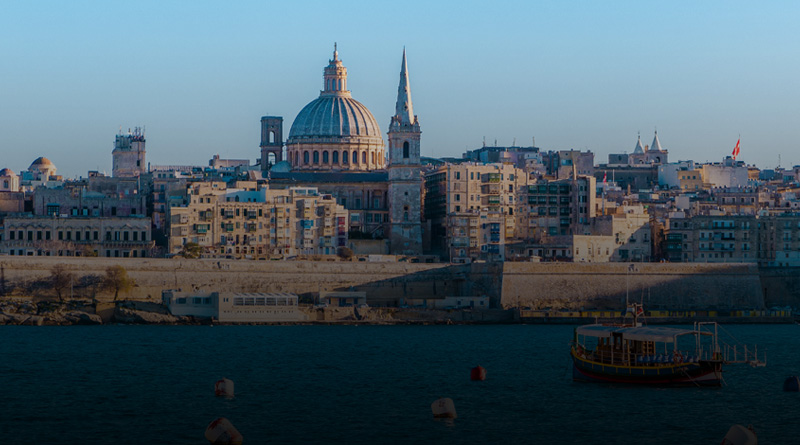
In the heart of the Mediterranean lies Malta’s capital city, Valletta, which dynamically functions as a European financial and administrative center, and also a city rich in culture.
When evaluating European jurisdictions for residence, corporate expansion, or wealth planning, international clients often look for an equilibrium between strategic utility and lifestyle appeal, something which the capital city has now become synonymous with.
Recognized as a UNESCO World Heritage site in its entirety, Valletta offers investors, business leaders, and global families an established base where centuries of rich cultural heritage co-exist with modern professional services.
A Living Monument in the Heart of Europe
Built by the Knights of St. John in the sixteenth century, Valletta was conceived as a master-planned city of stone and grid-iron streets designed for defense and administrative control. Today, its grand baroque architecture, grandmaster palazzos, and imposing limestone bastions serve not merely as open-air museum exhibits, but as the active backdrop for everyday commercial, civic, and legal life.
As a capital city of the European Union, Valletta provides direct access and administrative alignment with continental European markets. The capital houses key national institutions, including parliament, ministry headquarters, the courts of law, and regulatory bodies. For global investors, this concentration of governance and legal infrastructure creates an efficient commercial environment where public policy and professional services remain directly accessible.
The Advantages of an English-Speaking Mediterranean Base
A major practical advantage of operating in Valletta is Malta’s official bilingual status. English is an official language alongside Maltese, meaning that administration and documentation is written and conducted directly in English. This eliminates the operational friction, administrative delays, and translation overhead often encountered in other European jurisdictions.
Complementing this operational ease is the Mediterranean lifestyle that characterizes daily life in the capital. Valletta enjoys over 300 days of sunshine annually, a temperate climate, and immediate access to the sea. The city’s cultural landscape features fine dining, international art exhibitions, historic theaters such as the Manoel Theatre, and a thriving yachting culture centered around the surrounding Grand Harbour and Marsamxett Harbour.
Doing Business in Valletta: Modern Professional Services
Behind Valletta’s historic facades lies a modern financial and corporate service infrastructure. Over recent decades, Malta has cultivated a competitive regulatory environment that attracts high-net-worth individuals, families, tech entrepreneurs, and institutional investors.
Key Pillars of the Commercial Ecosystem
- Corporate and Tax Structuring: Malta offers a well-regulated framework for company formation, corporate redomiciliation, fund management, and trust structures governed by clear, EU-compliant legislation.
- Specialized Industry Sectors: The jurisdiction has established itself as a recognized European center for maritime services, corporate aviation, fintech, and digital innovation.
- Professional Talent Pool: Malta boasts a highly educated, international talent pool fluent in English (and other major European languages), supported by established legal, accounting, and advisory firms.
This corporate landscape allows international clients to manage cross-border holdings, establish regional headquarters, or structure family wealth within a transparent jurisdiction anchored by EU standards.
Real Estate Investment in Historic Valletta
Valletta’s property market occupies a distinct niche within Malta’s broader real estate sector. Due to strict heritage protection rules and geographical constraints as a peninsula, real estate in the capital is intrinsically limited in supply.
Restored sixteenth- and seventeenth-century palazzos featuring traditional wooden Maltese balconies, high ceilings, original flagstones, and views over the Grand Harbour command steady demand among high-net-worth investors. Properties in Valletta serve effectively both as primary residences for global executives and as qualifying capital investments for programs such as the Malta Permanent Residence Programme and the Global Residence Programme.
Residence Pathways: Connecting Lifestyle and Capital
To facilitate long-term settlement and international mobility, Malta offers structured residence frameworks designed for non-EU/EEA/Swiss nationals. These programs allow investors and their families to establish a secure footprint in Europe while acquiring property in prime locations such as Valletta.
The Malta Permanent Residence Programme (MPRP)
Designed for third-country nationals, the MPRP offers permanent residence status in Malta, granting beneficiaries and eligible dependants the right to reside indefinitely in the country and travel visa-free throughout the Schengen Area for up to 90 days in any 180-day period. The programme requires a combination of government contributions, a charitable donation, and a qualifying investment in residential real estate (either via lease or purchase).
The Global Residence Programme (GRP)
Tailored for non-EU/EEA/Swiss nationals seeking special tax status, the GRP is particularly attractive to individuals looking for a flexible European base. Beneficiaries under the GRP benefit from a flat 15% tax rate on foreign-sourced income remitted to Malta (subject to a minimum annual tax obligation), with no minimum physical stay requirement, provided they do not spend more than 183 days in another single tax jurisdiction.
Note that requirements around GRP are changing from next year. From January 1, 2027, all new applications in relation to this program will have to adhere to stricter rules.
Frequently Asked Questions
Why is Valletta considered a strategic choice for business and residence in Europe?
Valletta combines the administrative authority of an official European Union capital city with the stability of an established financial hub. It offers access to EU markets, an official English-speaking regulatory framework, sophisticated legal and corporate services, and a Mediterranean lifestyle within a UNESCO World Heritage environment.
How does the official status of English assist international clients in Malta?
Because English is an official language, all commercial laws, corporate registrations, tax documents, and legal contracts in Malta are drafted directly in English. Non-EU investors can execute agreements, communicate with regulatory bodies, and conduct daily business operations seamlessly without translation barriers or associated delays.
What are the main property investment requirements for the Malta Permanent Residence Programme (MPRP)?
Under the MPRP, applicants must either purchase a residential property in Malta or Gozo for a minimum of €375,000 or enter into a property lease agreement with a minimum annual rent of €14,000. The qualifying property must be maintained for at least five years.
Is there a minimum physical presence requirement under the Global Residence Programme (GRP)?
No, the Global Residence Programme does not require beneficiaries to reside in Malta for a minimum number of days per year. However, beneficiaries must ensure they do not spend more than 183 days in any other single tax jurisdiction during a calendar year to maintain their special tax status.
Can family members be included in Malta’s residence programs?
Yes. Both the MPRP and the GRP allow main applicants to include qualifying family members. The MPRP is notable for allowing up to four generations in a single application, including the spouse, financially dependent adult children, parents, and grandparents.