 Back to News
 Jump to other articles:
- Athens Property Hotspots: Where International Buyers Are Focusing
- Key Takeaways from Latitude’s Spring U.S. Event Series on Global Mobility
- Moving Money Across Borders: Why FX Strategy Matters
- An Exclusive Webinar: Securing EU Residency Through Real Estate in Greece
- Portugal Golden Visa: What the 2026 Presidential Election and Legal Changes Really Mean
Planning Ahead: The Safest Countries to Move to in Times of Global Unrest

Share:



It’s an unfortunate reality – geopolitical tension, economic disruption, and rapid policy change have become a recurring feature of modern life.
While most families never expect to relocate suddenly, many, especially those currently based in either the U.S. or in the gulf states, are now asking themselves a practical question: “What would it take to secure the legal right to live somewhere else if future circumstances required it?”
This shift reflects a broader change in how internationally minded families approach mobility. Rather than viewing a second residence or citizenship as a relocation decision, it is increasingly treated as a form of strategic optionality. The goal is not necessarily to leave one’s home country, but to ensure that the option exists if it ever becomes necessary.
In that sense, discussions around the safest countries to move to are less about reacting to a single moment in time and more about identifying jurisdictions that offer long-term stability, predictable legal systems, and a clear pathway to secure residency rights.
Importantly, most individuals who pursue global residence planning do not move immediately. Instead, they secure permanent residence or citizenship in advance, creating a second base that can be activated later if personal, political, or economic conditions change.
For those exploring this approach, several jurisdictions stand out for combining stability, speed to secure status, and long-term flexibility.
Fast, Low-Friction Permanent Residence in Stable Jurisdictions
For those prioritizing speed and certainty, a small number of programs provide direct permanent residence with relatively straightforward requirements. These options are often the starting point for individuals seeking the safest countries to move to while maintaining maximum flexibility.

Malta: A Permanent European Base
Malta offers one of the most straightforward ways to secure permanent residence within the European Union without relocating. As an English-speaking EU member state with a strong legal framework, a stable political environment, and a high quality of life with good food, Mediterranean sun, and dramatic coastlines, Malta is frequently chosen by families seeking a reliable European base.
Quick Overview
- Status: Permanent residence in an EU member state
- Timeline: Approximately 4 to 6 months
- Minimum budget: From €170,000 in program contributions, plus a qualifying property commitment (lease or purchase held for five years), and an assets test
- Presence requirement: No physical presence required to maintain status
- Family inclusion: Spouse, children, parents, and grandparents
Considerations
- Applicants must lease or purchase property in Malta
- The program focuses on a flexible permanent residence status rather than citizenship
For many internationally mobile families, Malta combines European stability, legal predictability, and minimal lifestyle disruption, making it a natural starting point when evaluating the safest countries to move to.
Download the Malta program guide here, and read more about Malta here.
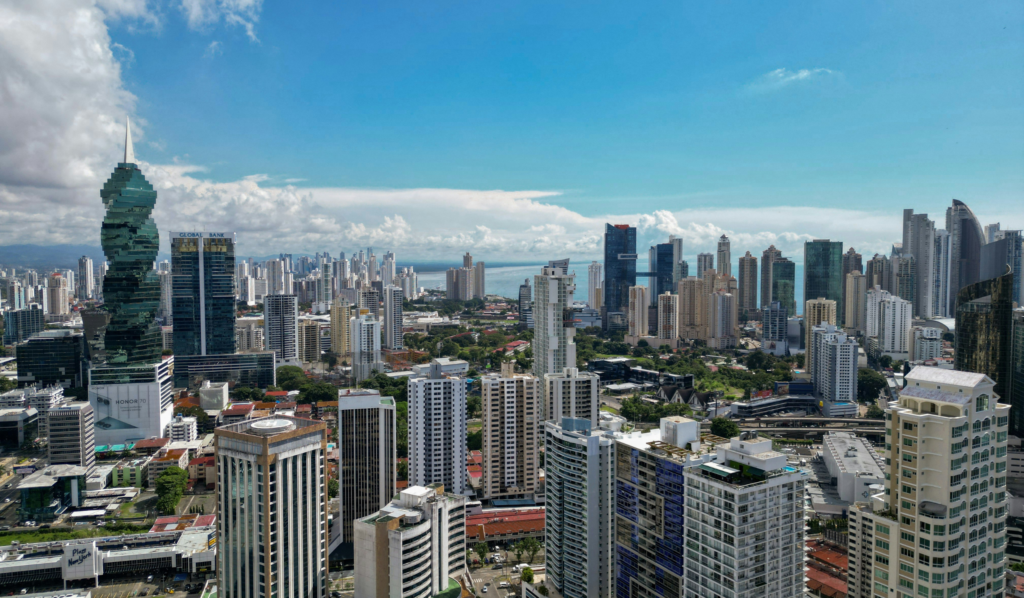
Panama: Fast Permanent Residence in the Americas
Panama’s Qualified Investor Visa has long been regarded as one of the most efficient residency frameworks globally. The program grants direct permanent residence with minimal ongoing obligations, making it particularly attractive for individuals seeking flexibility rather than immediate relocation.
Panama’s strategic location, U.S.-dollar economy, and territorial tax system have further reinforced its reputation as a practical base for internationally active families.
Quick Overview
- Status: Direct permanent residence
- Timeline: Approximately 30 to 60 days for approval
- Minimum investment: USD 300,000 in real estate
- Presence requirement: Visit once every two years to maintain status
- Family inclusion: Spouse, children under 25, and dependent parents
Considerations
- Real estate investment must generally be maintained for five years
- Citizenship is possible through naturalization over time but is not the program’s primary objective
Panama is often selected by those seeking one of the fastest permanent residence pathways available anywhere in the world.
Download the Panama program guide here, and read more about Panama here.
Long-Term Stability Anchors
Some jurisdictions are not chosen for speed alone. Instead, they appeal to families prioritizing long-term political stability, strong institutions, and geographic diversification.
These countries frequently appear in discussions about the safest countries to move to due to their stable governance and high quality of life.
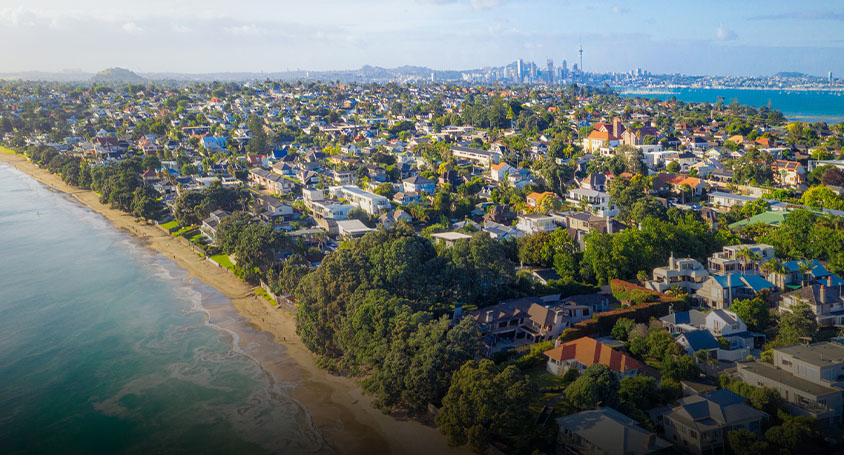
New Zealand: One of the Safest Countries to Move to Globally
New Zealand has long been viewed as one of the world’s most stable and well-governed societies. Its geographic distance from many geopolitical flashpoints and its strong democratic institutions have made it particularly attractive for long-term planning.
Through the Active Investor Plus program, qualified applicants can secure residence while making approved investments in the country’s economy.
Quick Overview
Status: Residence visa with a flexible pathway to permanent residence
Timeline: Approximately 4 months for initial approval
Minimum investment: NZD 5 million under the Growth category (approx. USD 3M)
Presence requirement: 21 days in New Zealand over three years under the Growth stream to graduate to permanent residence for life
Family inclusion: Spouse or partner and dependent children
Considerations
- Higher investment threshold compared with many residency programs
- Permanent residence is available after three years if the investment and presence requirements are met
- Citizenship requires substantially more time physically living in New Zealand
For those prioritizing stability above all else, New Zealand consistently ranks among the safest countries to move to.
Download the New Zealand program guide here, and read more about New Zealand here.

Canada: Permanent Residence via the Start-Up Visa (For Entrepreneurial Profiles)
For applicants who want a long-term North American base with strong institutional stability, Canada remains compelling, though the pathway we most often advise on is entrepreneur-led, not purely investment-led.
Canada’s Start-Up Visa (SUV) program offers a route to permanent residence for founders who can build an innovative business concept and secure support from a Canadian Designated Organization. It is best suited to applicants who are comfortable being evaluated on execution, credibility, and business fundamentals, rather than simply meeting a passive investment threshold.
In addition to the main founder, each Start Up has 3 to 4 co-founders who become 10% shareholders and qualify for permanent residence. To maintain the permanent residence status, one must spend two out of five years in Canada. The path to citizenship requires three out of five years in Canada. As such, this program lends more to a ‘Plan A’ approach as opposed to a ‘Plan B’ approach.
Quick overview
- Timeline: Approximately 3 to 4 years
- Minimum budget: From C$290,000 (program minimum package)
- What it delivers: Permanent residence in Canada (with a clear route to citizenship for those who actually live there)
- Key considerations:
- This is a semi-active pathway that requires business structuring, documentation, and genuine intention to spend meaningful time in Canada in order to maintain permanent residence and later qualify for citizenship.
- The program is currently suspended until June 30th, 2026. However, Latitude retains access to a limited number of co-founder positions under the program’s current framework.
- It remains unclear what the Canadian government will do after June 30th. The program may reopen with materially different pricing or conditions, or it could be closed to new applications altogether.
Flexible European Residence Anchors
Europe remains one of the most sought-after regions for global mobility planning, thanks to its education systems, healthcare infrastructure, and cultural accessibility. While these programs may not deliver immediate permanent residence, they offer a structured path toward long-term status.

Greece: Accessible European Residence
Greece’s residency program has become one of Europe’s most widely used entry points for international families seeking access to the region.
Quick Overview
- Status: 5-year residence permit that can be renewed indefinitely
- Timeline: 3 to 4 months
- Minimum investment: From €250,000 in real estate (which must be held for as long as the visa is required)
- Presence requirement: None required
- Family inclusion: Spouse, children, and parents
Considerations
- Residence permits require periodic renewal
- Permanent residence or citizenship requires longer-term planning
For those evaluating the safest countries to move to within Europe, Greece provides an accessible starting point.
Download the Greece program guide here, and read more about Greece here.

Portugal: A Long-Term European Pathway
Portugal’s Golden Visa program has historically set the benchmark for European residency by investment. Although the program has evolved in recent years, it continues to provide a structured pathway toward permanent residence and citizenship.
Quick Overview
- Status: Renewable residence permit with a flexible path to citizenship
- Timeline: 12 to 18 months
- Minimum investment: From €500,000 through approved investment funds or €250,000 donation
- Presence requirement: 14 days every two years
- Family inclusion: Spouse, children, and dependent parents
Considerations
- Processing times have been uncertain, but the government has been working on the backlog. New applications are expected to take 12 to 18 months moving forward
- Citizenship timelines are currently under policy discussion
Portugal remains a cornerstone of European mobility planning for those pursuing long-term access to the region.
Download the Portugal program guide here, and read more about Portugal here.
Fast Citizenship as a Mobility Layer
In addition to residence planning, some families choose to obtain a second citizenship that can be secured relatively quickly. While these passports do not automatically grant residence rights in other regions, they can provide mobility flexibility and a legal alternative nationality.

Grenada: Citizenship with Strategic Advantages
Grenada’s citizenship program stands out among Caribbean options due to its broad international mobility benefits and treaty relationship with the United States.
Quick Overview
- Status: Citizenship
- Timeline: Approximately 6 to 9 months
- Minimum investment: From USD 235,000
- Family inclusion: Broad eligibility for extended family
Considerations
- Citizenship does not automatically grant residence rights elsewhere
- Often used as part of a broader mobility strategy
Download the Grenada program guide here, and read more about Grenada here.
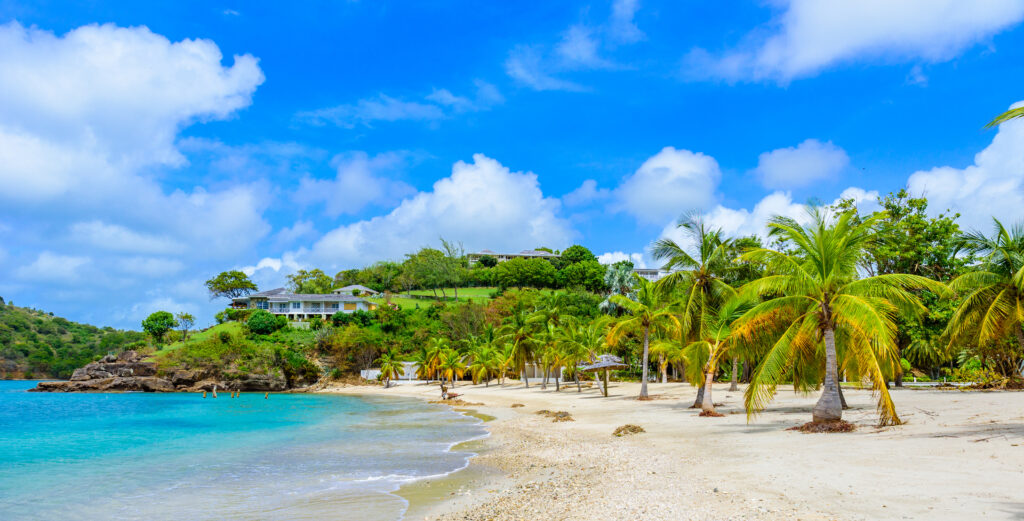
Antigua and Barbuda: Flexible Caribbean Citizenship
Antigua and Barbuda offers one of the Caribbean’s most accessible citizenship programs, particularly for larger families seeking flexible eligibility rules.
Quick Overview
- Status: Citizenship
- Timeline: Approximately 6 to 9 months
- Minimum investment: From USD 230,000
- Family inclusion: Extensive family coverage
Considerations
- Requires a short visit within the first five years
- Typically paired with residence planning in another jurisdiction
Download the Antigua and Barbuda program guide here, and read more about Antigua and Barbuda here.
Combining Jurisdictions: The Rise of Program Bundling
As global mobility planning has matured, many families no longer rely on a single program to meet every objective. Instead, they increasingly adopt what advisors describe as a bundled strategy, combining different jurisdictions for different purposes.
For example:
- A European residence permit may provide long-term access to education and lifestyle opportunities within the EU.
- A Caribbean citizenship may offer faster mobility rights and an additional passport.
- A stable jurisdiction such as New Zealand (which has been growing in popularity of late) may serve as a long-term relocation option if circumstances change dramatically.
In some cases, families also prioritize geographic proximity. For a U.S. family, for example, a nearby jurisdiction such as Canada, Panama, or the Caribbean can serve as an accessible secondary base, while a more remote location like New Zealand provides long-term diversification.
This layered approach reflects a simple reality: different jurisdictions serve different roles. Rather than seeking a single “perfect” solution, globally mobile families increasingly structure their options across multiple countries.
Learn more about program bundling here.
Citizenship by Descent: A Often-Overlooked Path to a “Safe” Second Passport
For some families, the most elegant form of global optionality is not an investment program at all, but Citizenship by Descent.
If you have a verifiable heritage from a country with strong long-term stability (Ireland and Italy are common examples) you may be able to claim citizenship based on ancestry. This route is highly case-specific and documentation-driven but, when it applies, it can be significantly more cost-effective than Residence By Investment or Citizenship By Investment programs.
Quick Overview
- What it is: Citizenship based on proven ancestral links
- Cost profile: Typically lower than investment migration routes (though legal, translation, and documentation costs apply)
- Timeline: Varies widely depending on the country, consulate workload, and document complexity. Minimum of 6 months.
- Key requirement: Evidence such as civil records, lineage continuity, and, in some cases, formal registration steps
Considerations
- Not everyone qualifies, and eligibility rules differ materially by country
- Missing documents, name discrepancies, and historical record gaps can affect timelines and outcomes
- It’s a process that rewards accuracy, professional handling, and patience
At Latitude, we support clients in assessing eligibility, building the documentary file, and navigating the administrative process, turning family history into a practical, future-facing mobility asset.
Learn more about the different Citizenship by Descent programs here.
Optionality Without Immediate Relocation
Discussions about the safest countries to move to often assume a dramatic relocation decision. In practice, however, most individuals simply want to ensure that the option exists.
Securing permanent residence or citizenship abroad does not mean abandoning one’s home country. Instead, it provides the ability to act quickly if circumstances change.
For those with the resources to plan globally, this form of optionality has become an increasingly normal part of long-term planning.
In an unpredictable world, the ability to legally live somewhere else is not necessarily a reaction to uncertainty… it is simply a way to prepare for it.