 Back to News
 Jump to other articles:
- Key Takeaways from Latitude’s Spring U.S. Event Series on Global Mobility
- Moving Money Across Borders: Why FX Strategy Matters
- An Exclusive Webinar: Securing EU Residency Through Real Estate in Greece
- Portugal Golden Visa: What the 2026 Presidential Election and Legal Changes Really Mean
- Residency vs Citizenship: How Globally Mobile Families Think About Plan B Today
Why Greece Real Estate Continues to Attract Long-Term Investors
Share:



For much of the last decade, Greece was viewed as a recovery story. Today, it is increasingly understood as a growth market.
Greek real estate has transitioned from a post-crisis market into one characterized by renewed activity, increased international participation, and broad-based demand across residential and mixed-use segments.
This shift has been supported by economic reform, improving market transparency, and sustained buyer interest from both domestic and foreign purchasers.
As of the end of 2025, Greece’s residential property market had recorded seven consecutive years of positive price movement, reflecting a prolonged period of recovery and normalization rather than short-term volatility.
For internationally minded clients, this has reframed Greece not as a tactical or cyclical opportunity, but as a market increasingly evaluated within a long-term European real estate context.
Capital Is Already Moving In
One of the clearest indicators of confidence in Greece’s real estate market is the scale of inbound capital.
Foreign direct investment into Greek property reached approximately €2.75 billion in 2024, representing nearly 30% year-on-year growth and close to 90% growth over the past five years. Investment volumes are now more than ten times higher than the pre-crisis average, a notable shift for a market that was once capital-starved.
This inflow is not driven solely by individual buyers. Institutional and corporate capital has also played a visible role, with multinational firms such as Microsoft, Pfizer, and Blackstone committing to long-term operations and assets in Greece. These moves tend to support employment, infrastructure, and (crucially for real estate) sustained housing demand in key urban and coastal areas.
A Market That Continues To Move
Since the mid-2010s, residential property prices in Greece have risen consistently year after year, reversing earlier declines and establishing a clear upward trajectory. Athens, in particular, has experienced strong appreciation driven by urban regeneration, infrastructure upgrades, and increased international demand.
What makes this cycle notable is not just the recovery itself, but its durability. Price growth has continued through periods of global uncertainty, rising interest rates, and broader European housing market slowdowns, which suggests demand is increasingly structural rather than speculative.
Several factors underpin this resilience:
- A limited supply of high-quality, well-located properties
- Strong demand from international buyers seeking EU exposure
- Ongoing government investment in transport, tourism, and urban renewal
- A gradual normalization of Greece’s financial system and economy
As a result, many clients now view Greek real estate less as an “emerging” opportunity and more as a late-entry growth market. One where fundamentals remain strong, but entry pricing still compares favorably with other Mediterranean capitals.
Beyond Athens: A Broader Investment Geography
While Athens remains the most visible market, value growth has not been confined to the capital alone.
Regional cities, lifestyle-driven island locations, and secondary urban centers have also seen rising interest, particularly where infrastructure, accessibility, and year-round livability intersect. Areas with strong rental demand, both long-term and short-term, have benefited from tourism recovery, remote work trends, and increased intra-European mobility.
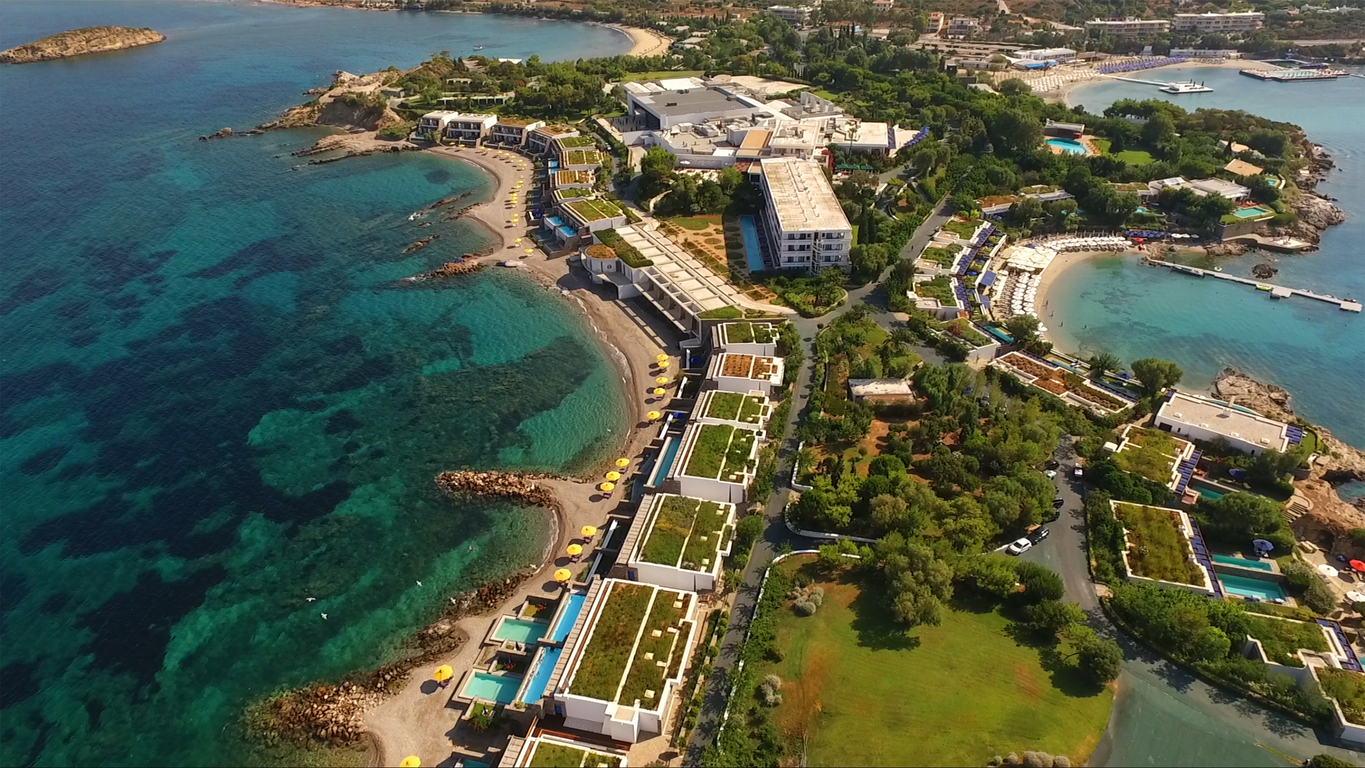
At the premium end of the market, particular attention has also turned toward the Athens Riviera. Stretching along the southern coastline of the capital, this area combines proximity to central Athens with a distinctly Mediterranean lifestyle defined by marinas, beachfront developments, and large-scale regeneration projects such as the Ellinikon redevelopment.
As infrastructure and luxury residential supply continue to evolve along this corridor, the Riviera is increasingly viewed as one of the most internationally competitive coastal markets in Southern Europe.
The diversity available also allows investors to align property selection with personal objectives:
- Income-generating apartments in urban centers
- Lifestyle residences in coastal or island locations
- Mixed-use or redevelopment assets in regeneration zones
Rather than a single hotspot, Greece offers multiple micro-markets at different stages of maturity, allowing investors to balance yield, lifestyle use, and capital appreciation within the same country.
Real Estate That Serves More Than One Purpose
One of the defining features of Greek real estate investment is its flexibility.
Properties can often be structured to serve multiple roles over time: as a personal residence, a rental asset, a family base in Europe, or part of a longer-term relocation or mobility strategy. This adaptability has become increasingly attractive to globally mobile families who value optionality without immediate lifestyle disruption.
For some clients, real estate acquisition also aligns with residence planning objectives, particularly through Greece’s long-established Golden Visa framework. While residency is not the primary motivation for all buyers, the ability to pair property ownership with lawful EU residence adds an additional layer of strategic value.
Greece’s Golden Visa framework continues to play a role in attracting international buyers, particularly those seeking a foothold within the European Union. While investment thresholds vary depending on location and property type, real estate routes currently begin from €250,000 in selected areas, with higher thresholds applying in prime zones such as central Athens and parts of the Attica region.
For many buyers, the program functions less as a driver of the investment decision and more as an additional benefit attached to a fundamentally attractive property market.
Crucially, however, the real estate case stands on its own merits, independent of immigration frameworks.
Why Timing Still Matters
Greek real estate is no longer ‘cheap’ in absolute terms, but it remains comparatively undervalued relative to peer European markets.
As international awareness grows and institutional capital continues to engage with Greece, pricing gaps are narrowing. For clients evaluating entry timing, the question is less about catching the bottom (which has passed) and more about securing exposure before convergence fully plays out.
Historically, real estate markets that undergo prolonged underinvestment followed by structural reform tend to experience extended growth phases rather than abrupt spikes. Greece’s trajectory to date aligns with this pattern.
A Measured, Long-Term View
At Latitude, we approach Greek real estate through a long-term lens.
Our role is not to promote short-term speculation, but to help clients identify properties that align with their financial objectives, lifestyle considerations, and broader international plans. That may involve income generation, capital preservation, family use, or integration into a wider residence strategy. Or, in many cases, a combination of these.
Greek real estate has earned its place back on the international investor map. For those considering exposure to Europe through tangible assets, it continues to offer a compelling balance of growth, lifestyle appeal, and strategic flexibility.
For clients who value substance over headlines, Greece remains a market worth serious consideration. Reach out to us to discuss more. You can also download our dedicated Greece residency program guide here.