 Back to News
 Jump to other articles:
- Athens Property Hotspots: Where International Buyers Are Focusing
- Key Takeaways from Latitude’s Spring U.S. Event Series on Global Mobility
- Moving Money Across Borders: Why FX Strategy Matters
- An Exclusive Webinar: Securing EU Residency Through Real Estate in Greece
- Portugal Golden Visa: What the 2026 Presidential Election and Legal Changes Really Mean
Exploring Malta: A Refined Guide for Prospective Residents
Share:



Malta’s attractive Permanent Residence Program (the MPRP) is undoubtedly extremely well known internationally. Yet, for an ever-increasing number of globally mobile families, the decision to pursue Maltese residence is no longer purely program-driven.
While the MPRP does indeed grant permanent residence and Schengen visa-free access without any physical presence obligation, Malta today is increasingly being looked at as a practical European base. One that supports extended stays, business continuity, family time, and long-term strategic positioning.
For many families, the process begins with a simple but important step: visiting Malta to see whether it truly feels like home.
While Malta’s residence frameworks are structured, regulated, and strategic in nature, the decision to establish a meaningful second base is ultimately lifestyle-driven. The island must make sense not only on paper, but emotionally, culturally, and practically.
Whether your intention is to spend extended periods in Malta, maintain an occasional European foothold, or simply preserve a strategic option for the future, an initial visit can be a natural next step before solidifying your residence pathway intentions.
Time on the ground allows you to evaluate lifestyle, neighborhoods, connectivity, and the practical realities of day-to-day life. At the end of the day, these are valuable insights that no program overview can ever fully capture.
This guide is designed to help you experience Malta through the lens of a prospective resident rather than a tourist.
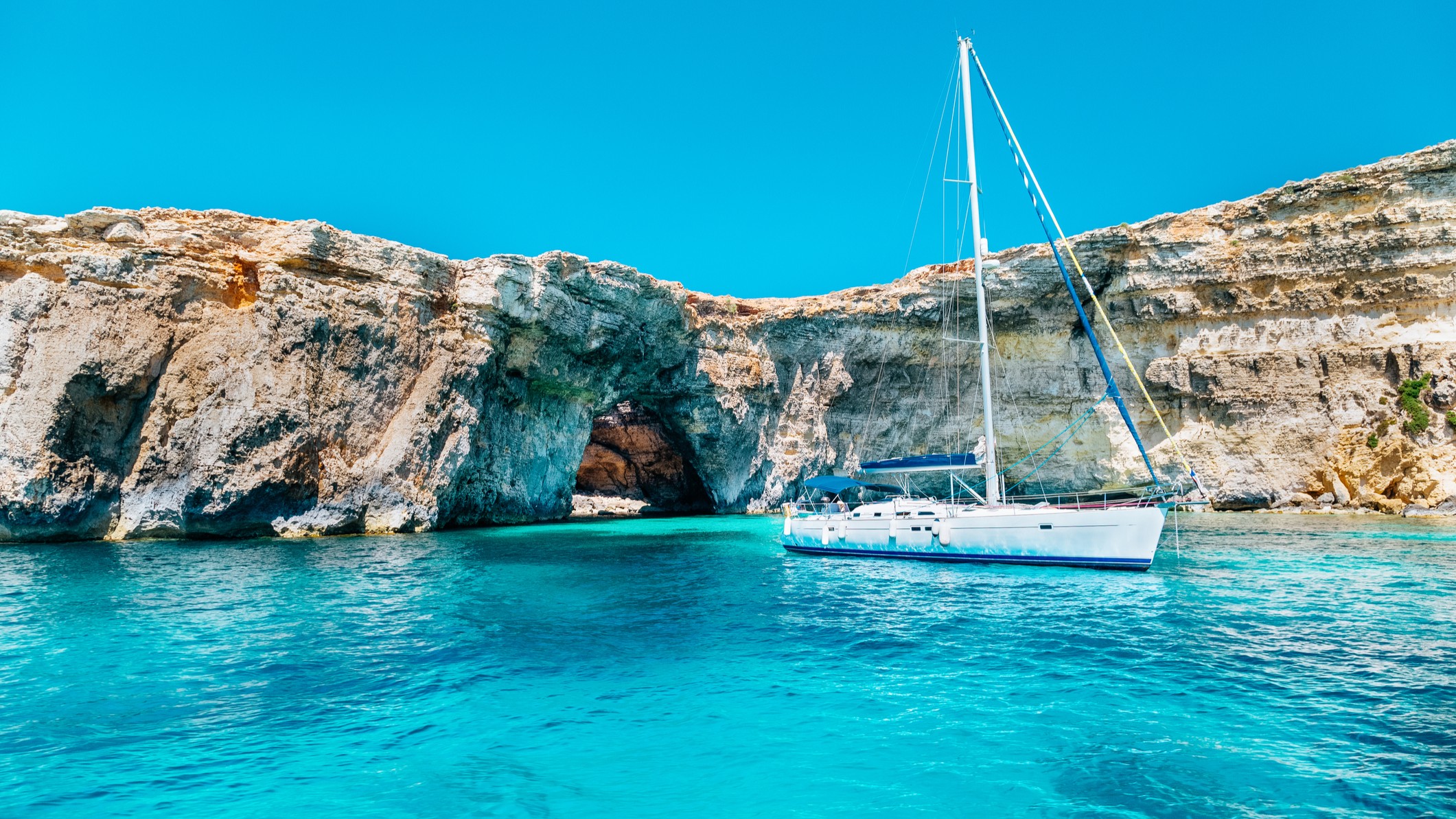
Experiencing Malta Intentionally
Before planning itineraries or appointments, most visitors benefit from understanding what fundamentally sets Malta apart.
Malta is one of the most historically dense places in all of Europe. While it is small in size (you can drive across the island in approximately 45 minutes) it’s also layered with more than 7,000 years of continuous civilization.
Several characteristics become apparent quickly:
- English is an official language and is used in business, education, and government
- Infrastructure, healthcare, and regulation align with EU standards
- A Mediterranean climate delivers more than 300 days of sunshine annually
- The population is internationally minded and commercially fluent
- Southern European warmth coexists with a distinctly British administrative order
Malta today does not feel like a large European capital. It feels manageable, interconnected, and navigable, which is precisely why many globally mobile families find it appealing as a second base.
Seasonality also matters. Malta experiences a clear distinction between high and low seasons. July and August bring peak tourism, particularly around beaches and central hubs, when the island feels livelier and more compressed. This period showcases Malta at its most energetic, but it is not necessarily representative of everyday life.
Spring and autumn are often considered the most balanced times to visit, offering warm Malta weather, fewer crowds, and an ideal rhythm for working, schooling, and longer stays. Winter remains mild by European standards, with a noticeably quieter pace that many residents value for its clarity and ease.
For prospective residents, experiencing Malta outside peak summer months often provides the most accurate sense of how life functions on a day-to-day basis.
Malta from the Water
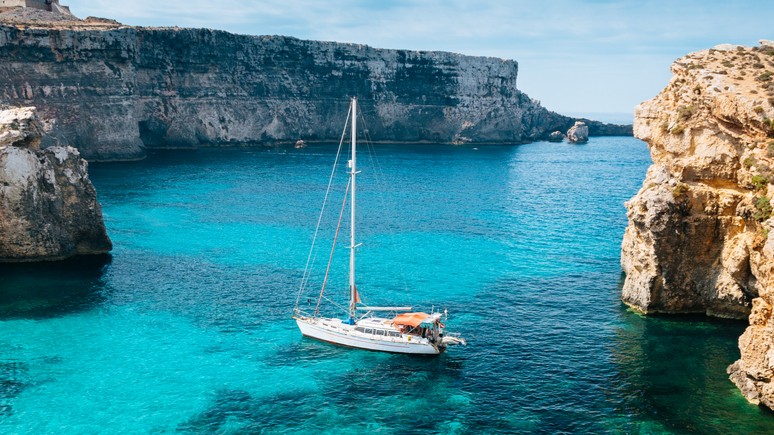
One of the clearest ways to understand Malta’s geography and pace is from the sea.
A private yacht charter along the coastline is as practical as it is enjoyable. Within hours, harbors, coves, marina infrastructure, and the relationship between residential areas become clear. The island’s compactness works in its favor, revealing how quickly one moves between business districts, leisure zones, and quieter residential pockets.
Malta’s climate makes time on the water a natural extension of daily life rather than a seasonal indulgence. Diving and snorkeling are particularly strong, with accessible wrecks and marine life located minutes from shore.
Golden Bay and Għajn Tuffieħa (Riviera Beach) offer open horizons and dramatic cliffs, while Paradise Bay in the north provides calm waters and direct views toward Gozo.
Comino’s Blue Lagoon, when visited early in the morning or later in the afternoon, feels entirely different from its midday reputation. Clear water, quieter anchorages, and unhurried swimming offer a glimpse of how downtime functions when approached deliberately.
An Aerial Perspective
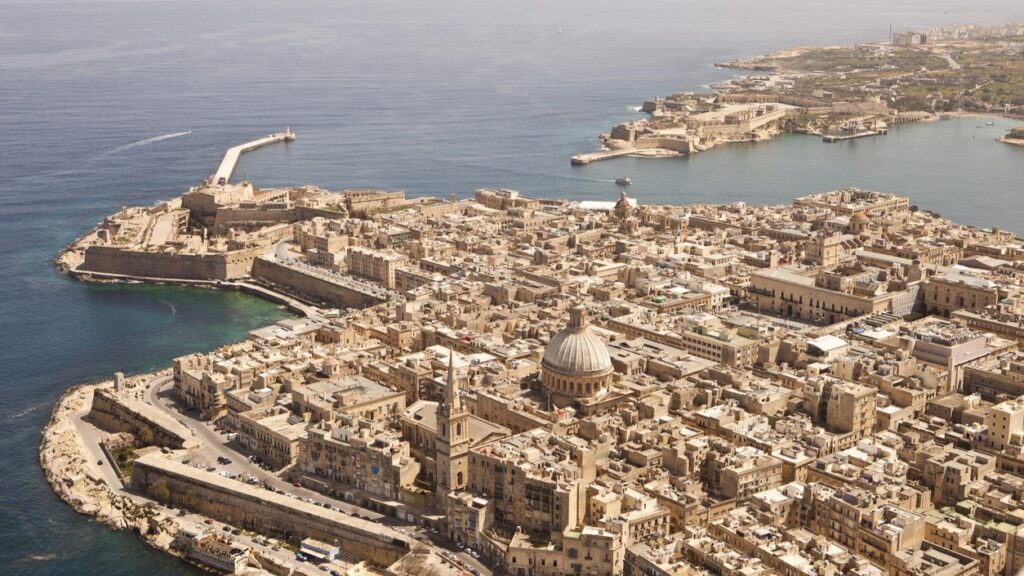
By air, Malta’s logic becomes even clearer.
A short helicopter or aerial charter immediately illustrates proximity between Valletta, Sliema, the northern coastline, and Gozo. Rather than feeling constrained by size, the island’s scale reduces friction. Commutes are short. Schedules simplify. Access replaces distance.
For globally mobile families balancing work, travel, and family time, that efficiency often becomes one of Malta’s strongest advantages.

History, Culture, and Context
Malta’s history is not confined to museums. In actual fact, it is very much a part of everyday life on the island.
Valletta, a UNESCO World Heritage site, remains a working capital with ministries, courts, cafés, and cultural institutions operating side by side. St. John’s Co-Cathedral, located in the heart of Valletta, is among the most extraordinary Baroque interiors in Europe. Beyond its architectural impact, it houses Caravaggio’s The Beheading of Saint John the Baptist, offering cultural depth that surprises even well-travelled visitors.
Mdina, the former capital, offers a quieter counterpoint. Guided tours, particularly those led by specialist local historians, provide valuable insight into Malta’s layered past and are often one of the most impactful ways to understand the island’s evolution.
The Grand Harbour and the Three Cities (Birgu, Senglea, and Cospicua) reflect Malta’s maritime and military history, while ancient Megalithic Temples (older than even the pyramids) underscore how deep the island’s story runs.
History enthusiasts may also wish to visit the Malta at War Museum in Birgu, which provides a grounded, first-hand perspective on the island’s strategic role during World War II.
During summer, traditional village festivals bring streets alive with music, fireworks, and communal celebration. For families, attractions such as Esplora Interactive Science Centre, Popeye Village, and the Malta National Aquarium add texture to longer stays.
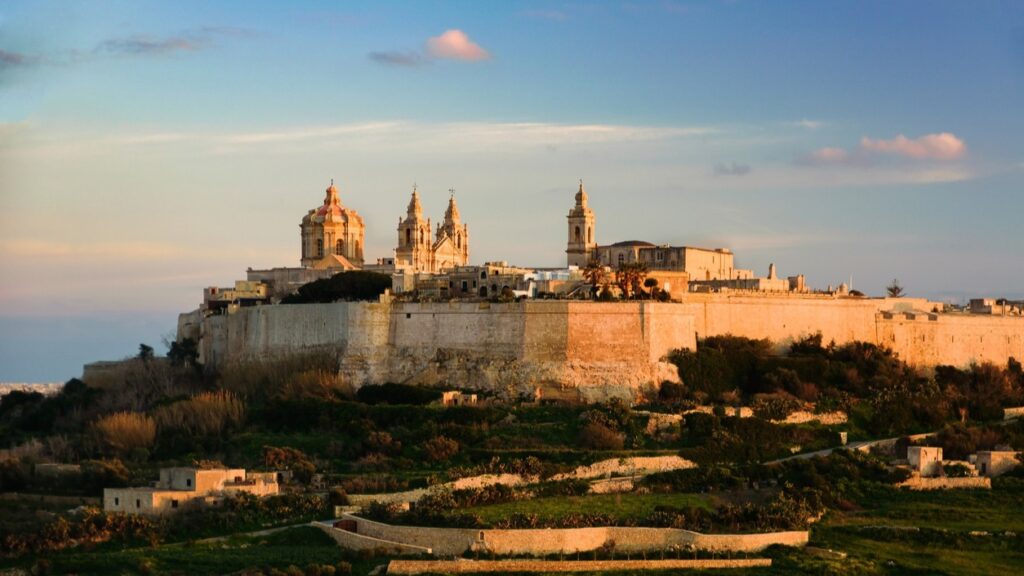
Malta Neighborhoods: Where Lifestyle Takes Shape
A meaningful visit should include structured exposure to residential environments. Malta’s neighborhoods vary significantly in rhythm, density, and atmosphere.
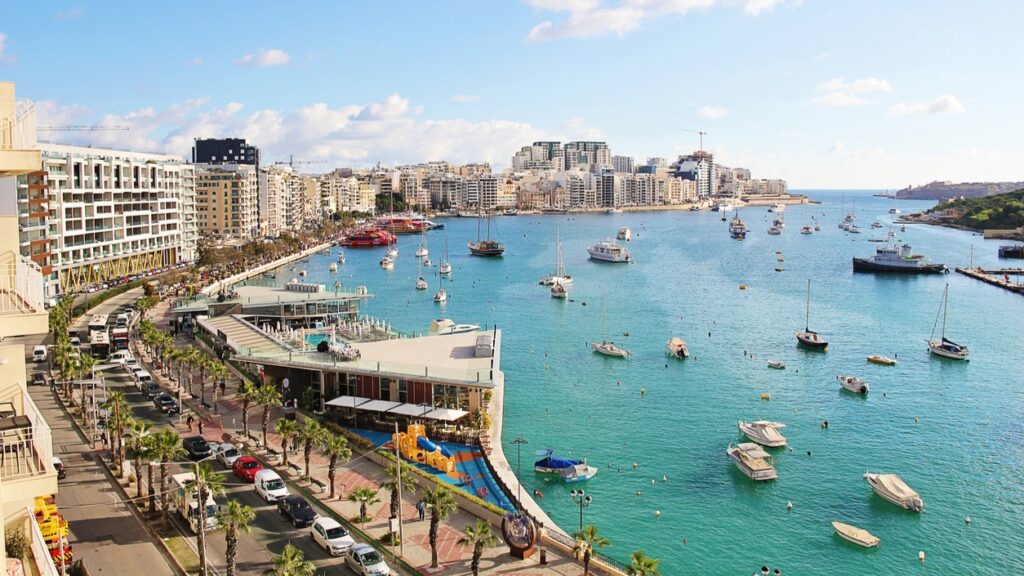
Sliema: Cosmopolitan & Walkable
Best for: Professionals, remote workers, families seeking convenience.
Sliema offers modern waterfront apartments, a walkable promenade, gyms, cafés, retail outlets, and ferry access to Valletta. It is Malta’s primary retail hub and one of the clearest examples of how daily life, business, and leisure integrate seamlessly.
Dining options such as Chophouse and waterfront cafés reinforce its practical, polished character. For those wanting an urban Mediterranean lifestyle with everything within walking distance, Sliema is often the first reference point.
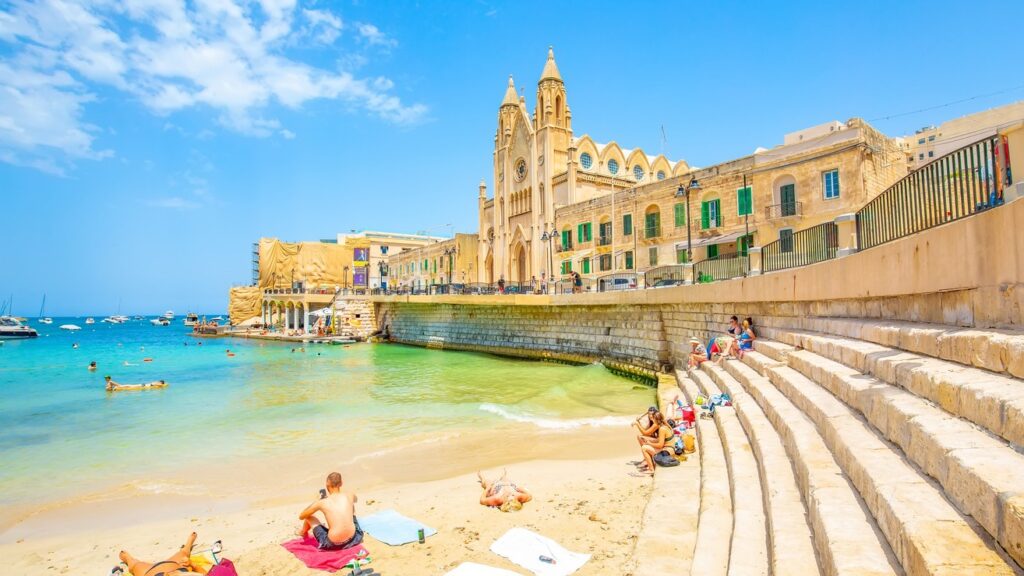
St Julian’s: Lively & International
Best for: Buyers seeking luxury residences and marina living.
St Julian’s is Malta’s luxury nucleus, home to Portomaso Marina and the Zaha Hadid–designed Mercury Towers. High-end apartments, international restaurants, and marina views dominate, alongside active nightlife in specific zones such as Paceville.
Many digital entrepreneurs and financial services professionals base themselves here, drawn by connectivity and international energy.
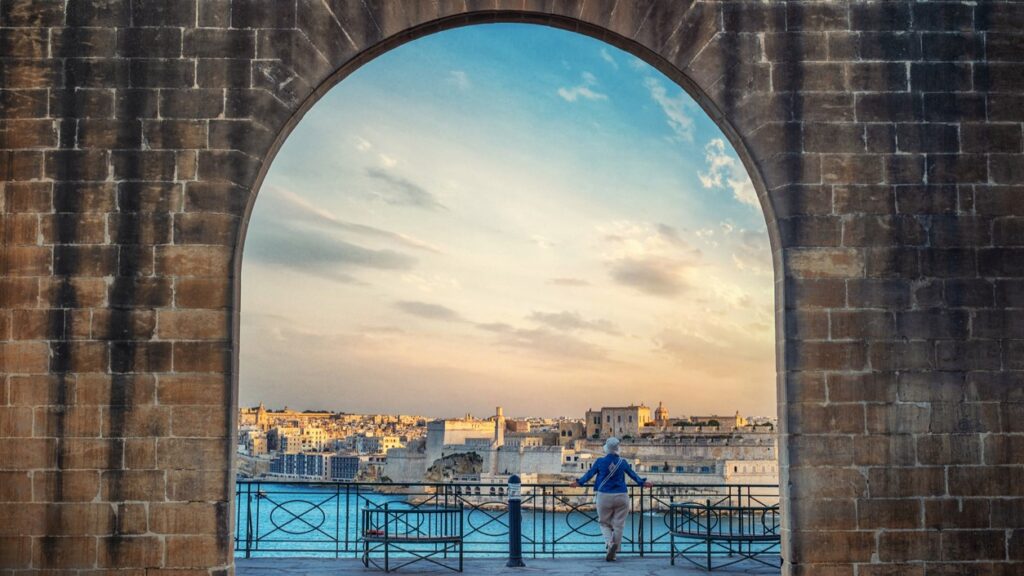
Valletta: Historic & Prestigious
Best for: Those who value culture, architecture, and capital-city vibes.
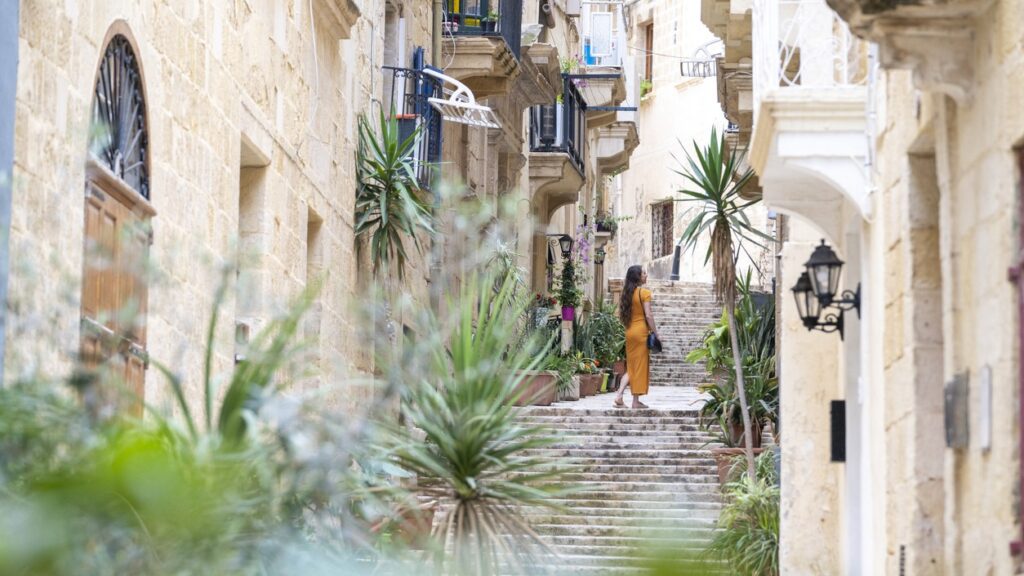
Living in Valletta means 16th-century townhouses, Grand Harbour views, and walking access to museums, restaurants, and institutions. Michelin-recognized restaurants such as ION Harbour and Under Grain reflect the city’s rising culinary profile.
Valletta is compact and vertical, favoring charm over space, and appeals to those who appreciate historic context paired with modern function.
Birgu: The Southern Harbors
Best for: Yacht owners, heritage buyers, those seeking understated prestige.
Across the water, Birgu (Vittoriosa) offers contrast.
Stone façades, narrow streets, and quieter evenings define the area. Birgu Marina (one of the finest on the island) makes this a natural choice for yacht owners, with dining and waterfront living integrated effortlessly.
A traditional Maltese boat ride across the harbor to Valletta transforms routine dinners into memorable rituals.
Madliena & Swieqi: Family-Oriented & Residential
Best for: Families seeking space, privacy, and proximity to schools.
These areas offer villas, detached homes, private pools, and a quieter residential rhythm, often favored by families relocating full-time.
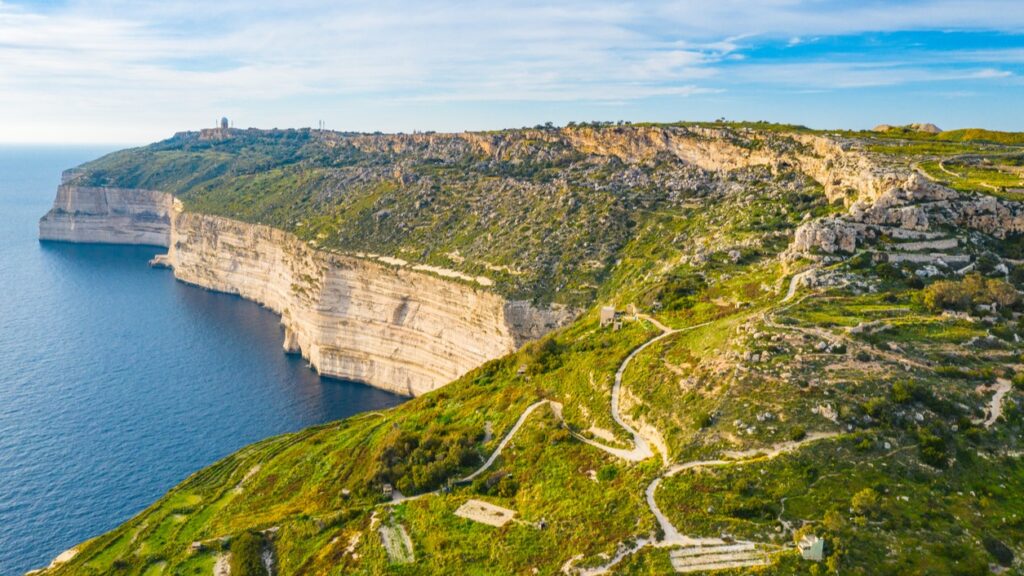
Dingli Cliffs: The Western Coast
Best for: Buyers seeking space, views, and proximity to nature.
The western coastline introduces openness and nature. Areas such as Dingli, Mgarr, and Manikata provide expansive views and a slower pace, appealing to those who value space and proximity to the countryside.
Gozo: A Different Rhythm
Best for: Families prioritizing privacy, space, and slower pace.
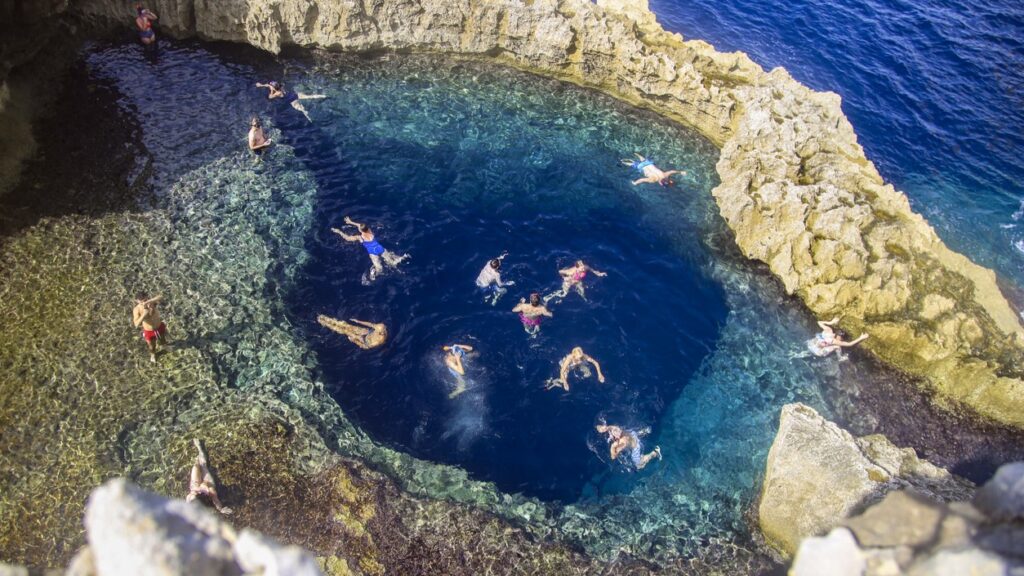
A short transfer to Gozo shifts the atmosphere yet again.
Less dense, more rural, and architecturally distinct, Gozo appeals to families seeking privacy and breathing room while remaining connected to Malta’s infrastructure.
Time here often involves engagement rather than entertainment, whether that is through small agricultural producers, local craft studios, or hands-on workshops that preserve traditional tile and stone techniques.
With its proximity to small-scale agricultural life, including beekeeping and family-run alpaca farms, an area such as Gozo is a rare find within Europe.
As such, for some, Gozo becomes their top choice for a calmer, more secluded primary residence. For others, it provides a getaway that balances busier weeks.
Where You Stay Matters
Accommodation matters more than most expect.
Where you stay shapes how Malta reveals itself. The right base allows visitors to experience how seamlessly meetings, dining, marina access, and personal time can coexist within a compact geography.
For prospective residents, the following properties are frequently favored for exploratory stays:
- The Phoenicia Malta (Floriana) – Ideally positioned at the entrance to Valletta, offering discretion, space, and immediate access to the capital while remaining removed from congestion.
- Iniala Harbour House (Valletta) – A refined, design-led option overlooking the Grand Harbour, well suited to shorter stays where privacy, views, and proximity to government and cultural institutions matter.
- The Westin Dragonara Resort (St Julian’s) – Popular with families and business travelers alike, offering resort-level amenities, marina proximity, and direct access to Malta’s commercial and leisure hubs.
- Hyatt Regency Malta (St Julian’s) – A contemporary base favored by professionals seeking walkability, modern comfort, and proximity to Portomaso and Mercury Towers.
Staying well allows visitors to experience Malta not as a destination, but as a functioning base… which is ultimately the perspective that matters most when evaluating long-term fit.
Private Appointments and Local Insight
For those considering residency or citizenship pathways, a visit to Malta can also include discreet, exploratory conversations.
These may involve meeting with Latitude’s advisory team, gaining clarity on available programs and, where appropriate, an introduction to trusted local partners who can provide perspective on property, lifestyle considerations, and practical next steps.
Such conversations are designed to be informative rather than transactional, allowing visitors to assess alignment before making any commitments.
If you are considering the Malta Permanent Residency Program, download our complimentary program guide.